
What if a region known mainly for farmland and villages becomes a major centre for industries, housing, businesses and international travel?
Something similar is taking shape along the Yamuna Expressway.
Over the past few decades, Delhi-NCR has continued to expand with cities like Noida and Greater Noida, growing into important residential, commercial and industrial centres.
But the need for more planned urban space has not ended here.The growing population is also putting pressure on Delhi-NCR's housing, transport and infrastructure.
In 2026, the region's population was estimated at around 7.86 crore and is projected to reach 14.73 crore by 2041. This expected growth highlights the need for more planned residential areas, better transport networks and new centres for businesses and industries.
Such growth brings greater demand for housing, employment, transport, industrial land and public facilities. Existing cities alone cannot be expected to meet all these future needs.
This is where YEIDA City enters the picture.
Where Is YEIDA City Located?
YEIDA City is located along the Yamuna Expressway in Uttar Pradesh. Its notified area covers parts of six districts, including Gautam Buddh Nagar, Bulandshahr, Aligarh, Hathras, Mathura and Agra.
The plan here was to create a complete township with residential areas, industrial areas, Film City, Medical Device Park, green buffer zones and much more, which would make the region an urban economic hub.
Master Plan 2041 outlines the proposed development and population growth of the Phase-I area.
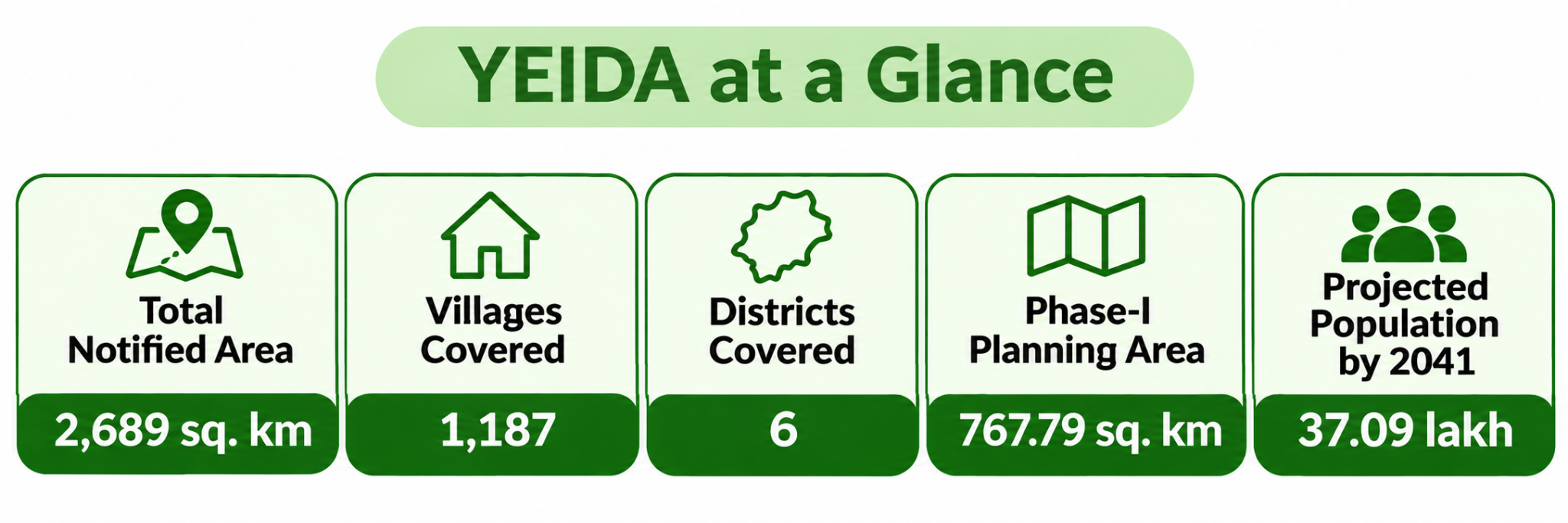
Source: YEIDA official records and Phase-I Draft Master Plan 2041.
These figures give us an idea of how large the development plan actually is.
How and Why Did YEIDA Actually Come Into Existence?
The need for faster growth and better cities in the region led the then UP Chief Minister, Rajnath Singh, to propose the Taj Expressway project in 2001.
On April 24, 2001, the Taj Expressway Industrial Development Authority was established under the UP Industrial Area Development Act, 1976. The idea was to improve connectivity between Greater Noida and Agra and eventually make this belt an economic hub.
Then came another important step.
In 2003, an agreement was signed with the Jaypee group for the development of the Taj Expressway.
A few years later, during CM Mayawati's tenure, land acquisition and other development activities gained momentum.
In July 2008, the Taj Expressway was renamed as the Yamuna Expressway, and the authority became known as the Yamuna Expressway Industrial Development Authority (YEIDA).
Finally, on August 9, 2012, the expressway was inaugurated by Akhilesh Yadav, the CM of UP at that time.
The 165-km-long, six-lane Yamuna Expressway connected Greater Noida with Agra and reduced travel time between the two regions. It was also designed with provision for future expansion to eight lanes.
But the expressway was only the beginning.
Over the years, YEIDA introduced master plans to develop residential sectors, industries, commercial areas and public infrastructure around this major road.
What Is the YEIDA Master Plan 2041?
The YEIDA Phase-I Draft Master Plan 2041 outlines how the region is planned to develop through residential sectors, industrial areas, commercial centres, transport networks and public facilities. It also projects a population of 37.09 lakh by 2041.
The Phase-I Draft Master Plan 2041 proposes approximately
37,539 hectares of urbanisable land, including around
6,606 hectares for industrial development,
2,077 hectares for commercial use and
1,500 hectares for logistics.
The Importance of Noida International Airport
An airport does not just provide connectivity. It acts as a magnet that attracts economic activities to a place and helps bind the whole ecosystem together.
It supports real estate development by improving connectivity, trade, tourism and employment opportunities.
Jewar Airport has played a major role in bringing attention to YEIDA City and supporting its development.
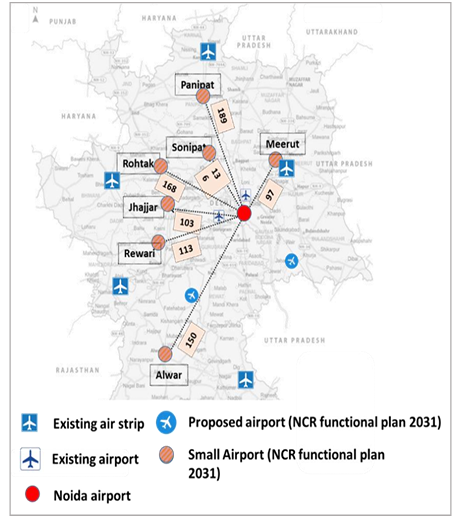
Map: Air Connectivity
Noida International Airport, also known as Jewar Airport, became operational on June 15, 2026, and has given another push to YEIDA City.
The airport was inaugurated on March 28, 2026, and IndiGo became the first airline to begin commercial operations, with the inaugural flight arriving from Lucknow.
Its first phase covers approximately 1,334 hectares, with one runway and one passenger terminal. It has an initial passenger handling capacity of 1.2 crore passengers annually.
The first phase involved an investment of approximately ₹11,200 crore.
The airport is also being developed with cargo and logistics facilities, which can support manufacturing, warehousing and other businesses in the surrounding region.
The airport is operational, while its future expansion and several supporting infrastructure projects are still being developed or planned.
YEIDA City Connectivity
YEIDA City provides strong connectivity through major expressways. The Eastern Peripheral Expressway provides wider regional connectivity, while the Yamuna Expressway serves as the main road corridor through the region.
Road connectivity has improved further with the operational Noida International Airport at Jewar.
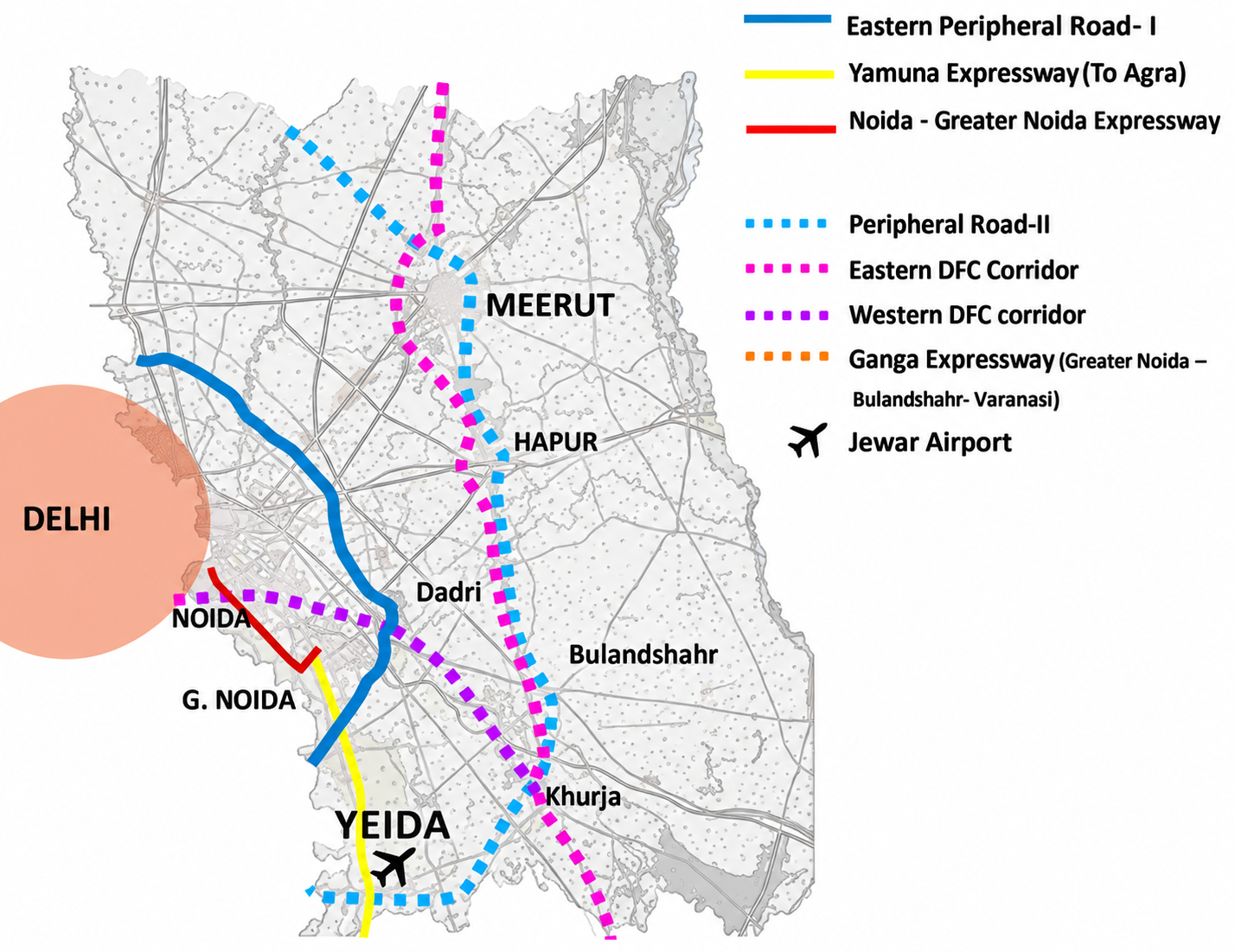
Map: Regional Connectivity
Is Metro Connectivity Available in YEIDA City?
Direct metro connectivity to the airport is still under planning.
A metro connection from Greater Noida towards the airport has been proposed, with routes being considered through the YEIDA region.
Then there is the proposed 72.44-km Ghaziabad–Jewar RRTS corridor, which is expected to provide connectivity between Ghaziabad, Noida, Greater Noida and Noida International Airport.
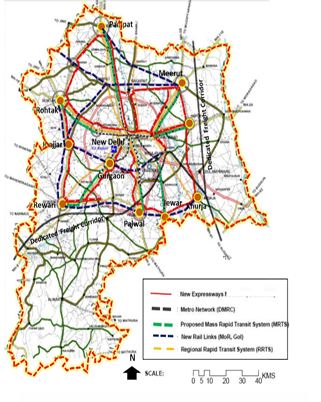
Map: Existing and Proposed Major Rail Network for NCR
The proposed corridor combines Namo Bharat and metro services. As of November 2026, it remains at the Detailed Project Report and approval stage, the construction has not started.
Other proposed road links towards Palwal and Khurja are also part of the wider regional connectivity plans.
What Are the Other Attractions for Investors and End Users?
Apart from Noida International Airport, YEIDA City has a lot to offer to real estate enthusiasts.
The development of:
Sports City
Financial and commercial centres
Food processing facilities
Film City
Apparel Park
Toy Park
Cargo and Logistics Park
Medical Device Park
MSME Park
Data Centre Park
shows the range of economic activities planned for YEIDA City and why the area has become a matter of interest for investors.
Industrial Development in YEIDA City
Industrial development has been an important part of YEIDA City's growth. The 2024 Draft Master Plan 2041 recorded that industries accounted for 33% of the developed land, followed by residential areas at 23% and institutional areas at 18%.
Since then, development has continued across several industrial sectors.
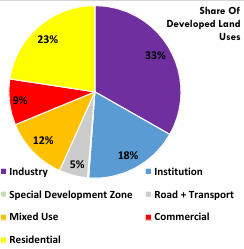
The 350-acre Medical Device Park in Sector 28 is under development. In October 2026, YEIDA reported that 123 of its 203 developed plots had been allotted, while construction had begun on 28 plots.
Similarly, the Apparel Park in Sector 29 had 159 allotted plots, while the Toy Park in Sector 33 had 148 allotted plots. Production had also started in 13 units on larger industrial plots.
Film City in Sector 21 is another major project spread over approximately 1,000 acres. Its first phase is planned over around 230 acres, although the main complex is not yet operational.
These figures show how YEIDA is gradually moving from land allotment towards actual industrial activity. The projects are expected to support different industries and employment opportunities as their development progresses.
Residential and Commercial Development in YEIDA City
While industrial development is an important part of YEIDA City, housing and commercial areas are equally important for its future growth.
What Types of Residential Properties Are Planned in YEIDA City?
YEIDA's residential development includes apartments, plotted housing and group housing projects. The Master Plan 2041 also provides for residential sectors with different population densities, along with existing village settlements and their expansion.
The Phase-I Draft Master Plan 2041 proposes approximately 6,807 hectares for residential development, including residential plots and group housing projects.
It also provides space for existing villages and their future expansion. Together, the residential areas, including village settlements, cover around 9,785 hectares.
But where will the businesses and everyday services come from?
The same plan proposes approximately 2,077 hectares for commercial development, including a Central Commercial Area of around 478 hectares.
These areas are planned for offices, shops, business activities and other commercial facilities.
The idea is to develop residential neighbourhoods alongside workplaces and essential services, rather than creating housing areas without supporting infrastructure.
What Makes YEIDA City Important for Real Estate?
So, what makes YEIDA City different from other developing areas around Delhi-NCR?
Well, it is the combination of housing, industries, commercial development and transport infrastructure within one planned region.
Think about it. The Yamuna Expressway already provides road connectivity, while the operational Noida International Airport has added air connectivity.
At the same time, industrial parks are progressing, residential sectors are developing, and several public transport projects are proposed.
And what happens when more businesses and industries begin operations?
They may increase the demand for housing, shops, offices and other services.
But here is something worth understanding.
Development is not happening at the same pace across every sector. Some areas already have infrastructure and construction activity, while others are still waiting for roads, utilities and commercial facilities.
This is why the progress of individual sectors also matters when we talk about YEIDA City's overall real estate development.
Of course, it is not possible to cover the huge concept of YEIDA City in a single blog. So, let us consider this as an overview of the Yamuna Expressway region.
But by now, we have a better idea of how YEIDA started, how much it has developed and the real estate opportunities the region may offer as its remaining projects take shape.
And if you're curious to know more about YEIDA City or thinking of buying a home here, feel free to give us a call at 7053707070.
Even if you're not planning to buy a property right now, there's no harm in having a conversation. After all, a call doesn't cost anything!